Why GPU Cloud Labs Are Becoming Essential for Students in 2026
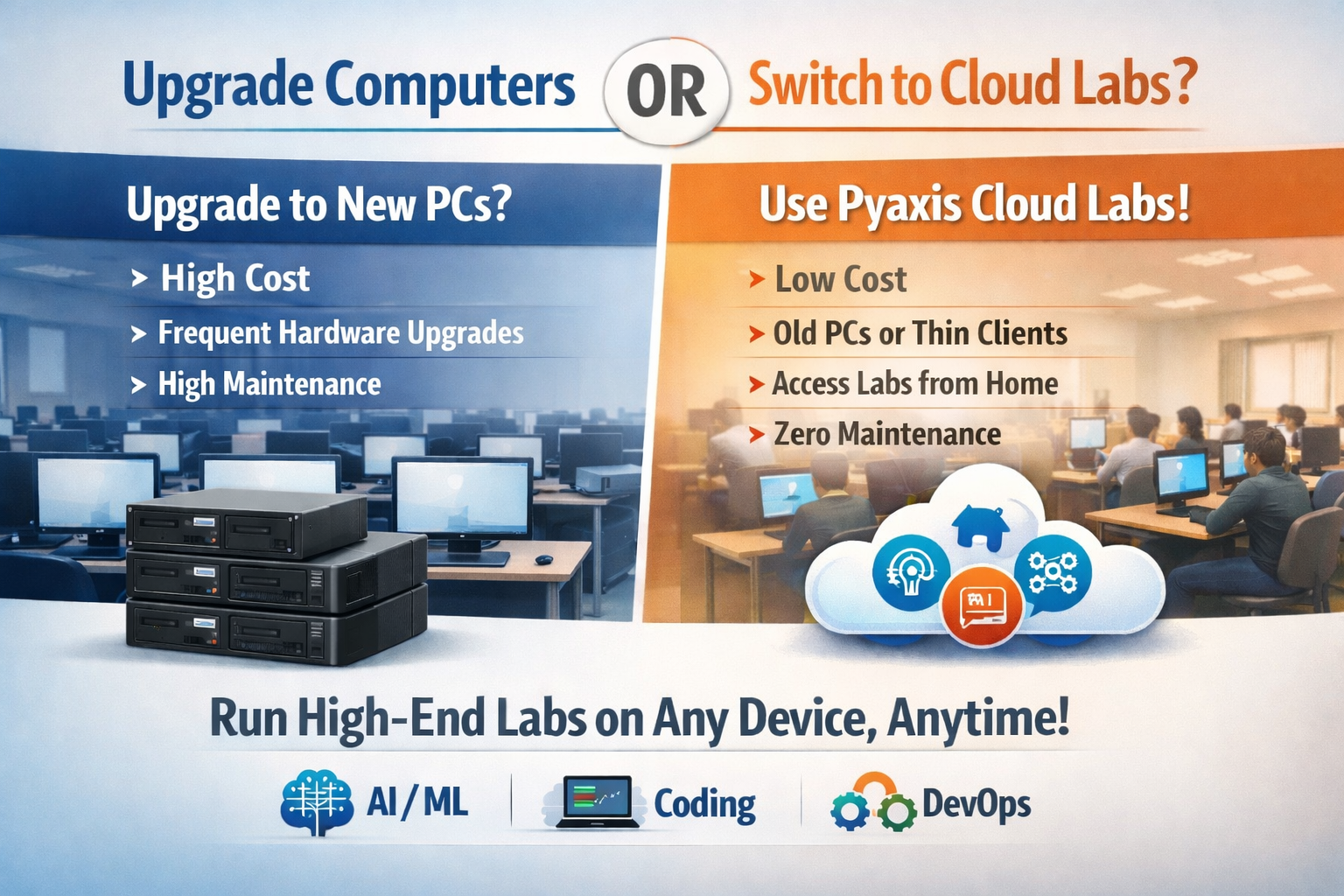
<p>Across India and globally, one trend is becoming impossible to ignore: students now need access to computing power that ordinary laptops often cannot provide. From AI model training and data science projects to 3D design, simulation, and video processing, academic workloads are getting heavier. This is why <strong>GPU cloud labs</strong> are emerging as a practical solution for colleges, universities, and training institutes looking to modernise digital learning without investing in expensive physical infrastructure.</p><h2>The Rising Demand for GPU-Powered Learning</h2><p>Courses in artificial intelligence, machine learning, robotics, computer vision, gaming, and engineering increasingly depend on GPU acceleration. However, many students still use entry-level or mid-range devices that struggle with these applications. Buying high-end workstations for every lab seat is costly, difficult to scale, and often underutilised outside lab hours.</p><p>GPU cloud labs address this gap by giving students remote access to powerful virtual machines with dedicated GPU resources. They can run advanced software from campus, home, or hostel using a browser or remote desktop client. This creates a more inclusive learning environment where access to performance is no longer limited by personal hardware.</p><h2>Why Institutions Are Paying Attention</h2><p>For administrators, the appeal goes beyond performance. A cloud-based GPU lab can reduce the burden of hardware refresh cycles, maintenance, and software deployment. Instead of managing multiple physical systems individually, institutions can centralise setup and control.</p><ul><li><strong>Faster provisioning:</strong> New lab environments can be created in minutes rather than weeks.</li><li><strong>Scalability:</strong> GPU resources can be increased during project submissions, workshops, or hackathons.</li><li><strong>Cost efficiency:</strong> Institutions pay for what they need, instead of maintaining expensive machines year-round.</li><li><strong>Anywhere access:</strong> Students can continue practical work beyond campus timings.</li></ul><p>This model is especially relevant in India, where institutions are balancing growing demand for emerging tech courses with budget constraints and varying student device quality.</p><h2>Benefits for Students and Faculty</h2><p>For students, the biggest advantage is simple: <em>they can focus on learning instead of fighting hardware limitations</em>. A cloud GPU environment allows them to experiment with larger datasets, train models faster, and use professional tools that may otherwise be inaccessible. It also supports continuity in blended and hybrid learning models.</p><p>Faculty members benefit too. Standardised environments reduce compatibility issues during lab sessions. Teachers can ensure every student works with the same software stack, libraries, and configurations. This makes practical teaching smoother and helps avoid the classic “it works on my system” problem.</p><h2>What to Consider Before Adoption</h2><p>Institutions evaluating GPU cloud labs should look at more than raw performance. Important factors include ease of access, support for academic software, data security, user management, and predictable pricing. Reliable internet connectivity is also essential, although modern virtual desktop platforms are becoming more efficient even on moderate networks.</p><p>As demand for AI and advanced computing skills grows, GPU cloud labs are shifting from a premium option to a strategic academic necessity. For Indian institutions aiming to deliver future-ready education, this trend offers a clear opportunity: provide every learner with access to high-performance computing, without the limits of a traditional physical lab.</p>